Feeds:
Posts
Comments

I just learned that Theodore Roszack died this past July in his California home at the age of 77 from liver cancer.

I’ll miss him. I’ll miss his wisdom, his perspective, his call to therapists everywhere to respond to the “madness involved in urban industrial society that has to do with our lack of balance and integration with the natural environment…” He urged us to join those ecologists and environmentalists who warn that we’re on a path of self-destruction. He implored us not to remain so focused on our clients’ individual issues that we failed to confront the wounds inflicted by a “deeply toxic” culture. In an interview with Jeffrey Mishlove on Thinking Allowed, he encouraged us to find out why ordinary people are engaging in behaviors that are so destructive. To ask, “how did we lose our intimate connection to the natural world?” And “what drives us so fiercely towards material gain at the expense of community, spirituality, health, morality, and so very much more?” And he adviced us to listen very carefully to the answers as closely and as genuinely as we listen to the stories of our clients.

He pointed out that while our mental health system was focused on trauma, pathology and illness for so long, there have always been those who’ve maintained that, “the deeper you look inside, the more reason you find for joy, for celebration; that the foundations for human nature are clean and good and innocent and creative.” He asked us, as mental health professionals, to lead the way in helping people move away from the burdens of shame and guilt and original sin and towards what psychoanalyst Eric Fromme called, biophilia — the love of humanity and life. If we were to fall in love with the beauty that’s contained both within the natural world and within ourselves, we’d be far more proactive in caring for ourselves, our planet, and one another.

In an interview on PBS which focused on ideas from his first book, an examination of the revolutionary youth movement of the sixties entitled, “The Making of a Counter Culture,” Roszac suggested that if the ethos of the sixties had prevailed today, “it would be a world, where people lived gently on the planet without the sense that they have to exploit nature or make war upon nature in order to find basic security. It would be a simpler way of life, less urban, less consumption-oriented, and much more concerned about spiritual values, about companionship, friendship, community. Community was one of the great words of this period, getting together with other people, solving problems, enjoying one another’s company, sharing ideas, values, insights. And if that’s not what life is all about, if that’s not what the wealth is for, then we are definitely on the wrong path.”

He called on therapists such as myself in his book, “The Voice of the Earth: An Exploration of Ecopsychology,” and he called on boomers such as myself in his last book, “The Making of an Elder Culture: Reflections on the Future of America’s Most Audacious Generation,” to relaim the spirit that was very much alive in the sixties, the one that “questioned rather deeply the cultural standards of the time. He asked us now that we are becoming elders to revive the energy and commitment we had back when we were young to work to birth a better and more just world.

http://vimeo.com/6539905

I will miss you Theodore. I took you for granted. I was too self absobed to fully hear your message. And now, as is all too often the case with we humans, you got my full attention only when I found out that you had left me. I’m listening now with both a sad and grateful heart….
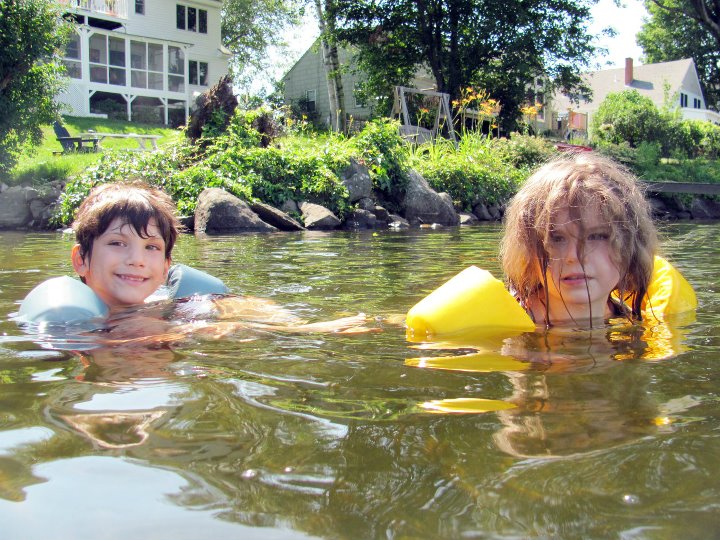
I sat with a young woman recenlty who continues to suffer from events that occurred long ago. She shared with me that she longs to be happy, but doesn’t know how. Of course, there is no simple answer that I can offer her. There is a quote by Robert Holden that I shared with her on that achingly beautiful late summer morning, one in which there was no place that she needed to go, and nothing on the afternoon’s agenda that she needed to do. The rest of the day was hers to shape as she chose. The quote was, ““Suffering is a decision not to let go of the past yet. Happiness is a decision to step into the present now.”

As we all know, Steve Jobs resigned on Wednesday as chief executive officer from Apple. Today I received an email from Learn Out Loud with a link to a commencement speech Steve, who never graduated from college, delivered at Stamford University. It’s wise. It’s short. It’s honest. It’s wonderful.

In “Kitchen Table Wisdom: Stories that Heal,” Rachel Naomi Remen wrote of a workshop she attended that was facilitated by the late Carl Rogers, creator of Client Centered Therapy.” Rogers shared the following with Remen’s group:

“Before every session I take a moment to remember my humanity. There is no experience that this man has that I cannot share with him, no fear that I cannot understand, no suffering that I cannot care about, because I too am human. No matter how deep his wound, he does not need to be ashamed in front of me. I too am vulnerable. And because of this, I am enough. Whatever his story, he no longer needs to be alone with it. This is what will allow his healing to begin.”

Of all the wisdom that has been shared with me over my many years of training and experience as a therapist, Rogers words reflect the true essence of healing.

When we encounter times in our lives that disorient us, frighten us, or wound us, we generally view them as unwelcome interruptions or unfortunate detours that have been inflicted by some outside force, or are the result of our own misguided actions. Seldom do we recognize that the discomfort that we’re experiencing may in fact be originating from a very deep and wise place inside of ourselves that is calling to us. Calling for us to stop and to listen, to explore the meaning and purpose of our lives, and to assess whether our actions and choices reflect what is best for us and in us. A voice that calls us to answer the question, “is the path that I am on now one that will constrict or enlarge me, hollow me out or deepen me, distract me or teach me, harm me or heal me?”

I listened to Matthew Fox on a Sounds True podcast this evening. Fox shared,

“I really think our species is in a great dark night of the soul at this time, because we’re all unsure about what the future holds, with so many decisions ahead of us and so many institutions not working, from government to politics to economics, and many of our religions are in bad shape, education… It is one of these times when there has to be this breakthrough. This creativity has to come out of the emptying. People in AA learn this, too, that the “bottoming out” that happens there is a profound shift in their entire way of being in the world.”

What will emerge from our collective dark night? What will we save, create, celebrate, grieve, reclaim, and love, as we move through the darkness and into the light?

The Hidden Letter

It has been an incredibly beautiful week here as we begin to make preparations to move the retreat and training division of SagePlace to the lake house in central Maine. During this process we discovered a 5 page goodbye letter written to the house and hidden away in a secret hiding place for twenty-seven years. The lettter was written by a man and his children who had lived here then and while sad to leave, were also grateful for the healing which took place and wrote with tremendous honesty and beauty about their experiences. The letter concluded with a riddle written by a young child (who would now be a middle aged adult) to whomever might discover the letter in the future. If we solved the riddle correctly, it appeared to imply that there was a treasure that lived in the heart of Wayne – the house itself. We tucked the letter safely back in its hiding place and have decided that over the years we will add our own letters to these very dear people who remain unknown (but very much appreciated) to us in the hopes that far off into the future they will all be uncovered again and will touch the hearts of future residents of the house as our hearts were touched.

Following is an untitled poem that speaks to me of all of the holy places available to each and every one of us…

I do not have to go
To Sacred Places
In far-off lands.
The ground I stand on
Is holy.
Here, in this little garden
I tend
My pilgrimage ends.
The wild honeybees
The hummingbird moths
The flickering fireflies at dusk
Are a microcosm
Of the Universe.
Each seed that grows
Each spade of soil
Is full of miracles.
And I toil and sweat
And watch and wonder
And am full of love.
Living in place
In this place.
For truth and beauty
Dwell here.

By poet and activist, Mary de La Valette

The older I get, the more I become aware that there truly are no ordinary days.

Within my own body there reside one hundred trillion cells that are busily performing a synchronized dance involving a million moves per second, while I go about my life oblivious to it all. My brain alone, a tiny thing really in the great scheme of things, is home to 100 billion furiously busy neurons. At the end of any single day of the week my heart will have beaten approximately 100,000 times, and I will have taken approximately 17,280 breaths without having any conscious awareness of these essential processes.

Today, between 150 and 200 species of plant, insect, bird and mammal will become extinct, and every five seconds one absolutely unique and miraculous child will surrender his or her unfinished life due to malnutrition. And within the next 24 hours of my life, approximately 156,000 people will die, and 384,000 will be born.

There is no day that is truly unremarkable or even uneventful. This troubled and still beautiful world is overflowing with firsts and lasts, epiphanies and forgotten memories, mist filled mornings and stunning sunsets, hard won victories and irrevocable losses.

In “The Mermaid Chair” by Sue Monk Kidd, Jessie, the main character in the novel, observes while reflecting on her life, “I could even feel how perishable all my moments really were, how all my life they had come to me begging to be lived, to be cherished even.” Situated here and now in the midst of this July afternoon I am struck by the moments that have passed me by today unnoticed, uncelebrated, undiscovered.

There is so much to inspire awe that surrounds me. I press a few buttons and I am almost instantly graced by beautiful and meditative music. I recall the incredible courage and strength of a very special client that I worked with this morning. I bite into a sweet and fragrant orange grown and harvested far from where I am now. I watch a tiny bird at the feeder outside of my window, a fragile creature that will fly thousands of miles away in autumn, only to repeat the journey a few short months later. I savor the sight of the coneflowers gently waving in the breeze, their roots buried under the winter snow not so long ago only to rise again and follow the sunlight.

James O’ Donahue wrote, “Each day is a secret story woven around the radiant heart of wonder.” I am blessed by this day, one like so many others, one that will never exist again, one that is saturated with music and miracles.

We each face more than one period of crisis during our lives. Encounters that can shake us, break us, and often take us to darker, deeper places than we ever planned on going. I call these encounters BirthQuakes.

In her book, “No Enemies Within,” Dawna Markova describes these experiences as sacred catastrophes and observes, “Suffering is the soil of renewal. The burden and responsibility of learning your way through the ‘sacred catastrophe’ that is a turning point is that you must change the way you are living your life – deep, fundamental changes of the entire system. Often these are made in very small steps, but still they require great strength of heart. Our soul is asking nothing less of us than that we reassert the truth of our true potential.”

Michael Meade refers to such occurrences as initiatory events, encounters that “mark a man or a woman’s life forever.” Regardless of what we name them, when a crisis strikes or the forces inside of us that contain vast amounts of uncertainty (and wisdom) erupt, we all too often resist. And who can blame us, the unknown is generally rife with risk. And speaking for myself here, I’m not a particularly good risk taker. I want to keep my options open, maintain an exit strategy and possess at least two well thought out back up plans. And yet, every now and then, no matter how careful I try to be, I find myself in the midst of some hazy unknown territory without a reliable map. And in spite of all of my training in stress management, mindfulness, positive psychology and learned optimism, I seldom feel prepared to confidently navigate foreign terrain.

My husband and I loved climbing the rocks on the Maine coast and for several years made an annual pilgrimage to Acadia Park in Bar Harbor where we would gaze out over the ocean from the summit of Mount Cadillac in silence and in awe. And then, without warning, in early mid-life, I developed vertigo whenever I looked down from high places. All of a sudden, I became nauseous and the world began spinning whenever I came too close to the edge of places I had effortlessly travelled to before. The edge became a frightening place where the world seemed to spin out of my control.

Poet, David Whyte wrote, “In our personal pilgrimages there are constant edges that we are asked to go to. And if you shy away from these pioneering edges because you feel that they lead through doorways that are too difficult, you stay in a kind of bland middle…There is no human being who can stay at the edge all the time, and you shouldn’t try and force yourself to the edge. We’re creatures of visitation and absence, and we learn through visitation and absence. But, if you don’t spend any time at all in places where you are being broken open, where you are being enlarged, where you are being humiliated, where you’re being re-tooled for a larger world, then you stay in your old life and can become haunted by it.”

For years I attempted to force myself to return to the edge, as close as possible to the precipice where land and air and ocean seemed to meet. And while I succeeded from time to time, the experience no longer contained magic, only misery, and so eventually I gave up. I had to accept that there were places in the world that I could no longer comfortably stand. Something inside of me had been altered, forcing new limits and leaving me both disappointed and humbled as I found myself taking new paths up the mountain, encountering the border between ocean and land from a different perspective.

I began spending more time exploring alternate landscapes, places I’d seldom taken the time to investigate before. I fell more in love with lakes and rediscovered my affinity for rivers. Rivers – unrelenting, constantly in motion, moving passages that wind around and over obstacles, reflecting sunlight and moonlight, and connecters of the past and future while always in the eternal present.

One of my earliest experiences of awe was peering between the bars of a bridge, mesmerized by the mighty Aroostook River. This memory comes with a hazy and yet compelling notion of a dreamer being awakened at that moment within the heart of a tiny little girl. And one of my greatest ally’s in healing four decades later from a lonely and unanticipated grief was the Congaree River as I followed the river walk daily and meditatively along its shores.

When I first encountered the house that we live in now, it had no well or adequate septic system, and no bathtub or even a clean surface anywhere. It was a sad looking house, complete with crooked floors, rotting wood, cracked and broken linoleum, and was threatening to collapse in on itself. The little house would never be a showplace, or well suited for entertaining large groups ofamily and friends, nor would it offer a serene and quiet safe haven as traffic on route 131 ran just steps away from its front door.

I did not choose this house as a permanent residence. I didn’t for a moment want to move over a thousand miles away from the friends, family, and community that I had come to love whole heartedly, or leave my sweet and light filled cottage, and the life that I felt both blessed and safe in.

Moving to this little house in Wayne on Lake Pocasset was accompanied by heart wrenching loss and a longing that has not even now, years later, been completely extinguished. Still, my heart has come to open more readily here than anywhere else I have ever taken shelter. David Thoreau wrote, “A lake is the landscape’s most beautiful and expressive feature. It is earth’s eye; looking into which the beholder measures the depth of his own nature.” I have felt lost here, alone here, bereft and afraid here, and at the same time this place has both soothed and helped to deepen me. It has become my soul’s home.

Sometimes we lose ground. And at other times we discover that the place in which we first faced catastrophe, has ultimately led us to the brink of discovery; to a country where wisdom lives and the sacred resides. Bless you, bless you where ever you are, and may you come to appreciate that the place where you have currently found yourself, right here and right now, (whether welcomed or unwelcoming) may truly be holy ground.

Yesterday I read Karen Hansen’s article, Voluntary Simplicity Brings Greater Happiness, Sustainability based on a recently published paper by ecopsychologist, Tim Kasser entitled, Ecological Challenges, Materialistic Values, and Social Change

Coincidentally, I had just finished Cecile Andrews book, Slow is Beautiful: New Visions of Community, Leisure and Joie de Vivre . As a therapist, I am deeply committed to learning as much as I can about what contributes to our happiness as well as what increases our suffering.

There’s so much pertinent information in Andrews book that I am limiting myself to the following points, otherwise I’d be writing for days.

The greatest indicator of a nation’s health, as measured by longevity, is the distribution of wealth. The larger the gap, the lower the life expectancy. (In his book, “Gross National Happiness” by Arthur C Brooks, Brooks reports that, “Income inequality in the United States is rising, according to most responsible estimates. For example, in 1973, the average family in the top quintile earned about ten times what the average bottom-quintile family earned. By 2003, this differential had grown to fifteen times.”

The consumer society fosters division, destruction and competition. It’s essential that we recognize that the premise of the ‘pursuit of happiness’ is being used to manipulate Americans into living consumer life styles leading to behaviors that are destroying the planet and promoting war. Understanding what truly makes us happy will lead to healthier, more meaningful and more sustainable ways of life.

Researchers agree that after essential needs are met, more money does not lead to happiness. “If you’re poor, more money makes you happier. After that? Nothing,” observes Cecile. She also cites the research of David G Myers who reports that today Americans are literally twice as rich as we were in 1957, however, the number of people who say they are very happy has been reduced from 35% in 1957 to 32%. During the same time period violent crimes have quadrupled, teen suicides have tripled, and the divorce rate has doubled.

Tim Kasser points out that simply desiring more money than we have leads to unhappiness. Kasser shares on the website, zephyr.com that, “From my perspective, the most important thing to learn about happiness is that the research shows it doesn’t come from money, from possessions, from fame, and from image — those are all empty pursuits that only bring temporary shots of superficial happiness. Happiness comes from pursuing the interests that you have, from building good relationships with your friends and family, and from contributing to the broader world.” Materialism on the other hand is associated with low scores for both self-actualization and vitality along with high scores for insecurity, anxiety and depression.

Andrews cites the work of additional researchers including Robert E Lane , Robert Putnam, Martin Seligman, Richard Davidson, Barry Schwartz, Peter Whybrow , Richard Layard, Daniel Nettle
, and Bruce O’Hara.

John de Graaf, founder of the Take Back Your Time movement, points out that Americans are working 20% longer today than they did in 1970 and work almost 350 hours more than western Europeans.

Andrews suggests that the psychic numbing that is so prevalent in the United States is “a result of the fact that we do indeed feel guilty because we know we have so much more than the rest of the world. We know we’re damaging the planet for our own gratification. How could we not be profoundly depressed over the state of our soul. Lifton says that the numbing can protect us from going mad when the grief and the threat to our sanity are too great. But there are side effects: Our overall ability to feel also shuts down – including the ability to feel joy.”

We require joy, choice, authenticity, play, and laughter in order to truly experience joie de vivre, a keen enjoyment of living according to Webster’s Dictionary, and an experience all too rare today in the United States.

Cecile stresses that feeling part of a community is essential to our well-being and defines it as “about caring for people, feeling safe, feeling accepted, feeling like you belong.”

She calls for the growth of the slow counterculture where we “try to work less, spend less and rush less. We spend more time with family, friends, and community – or pursuing our passions. We watch less television, avoid malls.”

In The State of the World Report, 2010 Andrews and Wanda Urbanska write, “In the United States, the Slow movement has become a part of the simplicity movement, encouraging people to live deeply by exploring and reclaiming the ancient vision of leisure. People are beginning to find ways to take back their time in order to walk more, talk with their neighbors, and spend more time in local neighborhoods.”

Andrews quotes David Orr who points out, “The plain fact is the planet does not need more successful people. But it does desperatley need more peacemakers, healers, restorers, storytellers, and lovers of every kind. It needs people who live well in their places. It needs people of moral courage willing to join the fight to make the world habitable and humane. And these qualities have little to do with success as we have defined it.”

As I take yet another step closer to living a life that more closely incorporates my values, Slow is Beautiful is certainly one of the books that has inspired me. I’ll be writing about other books in the future.