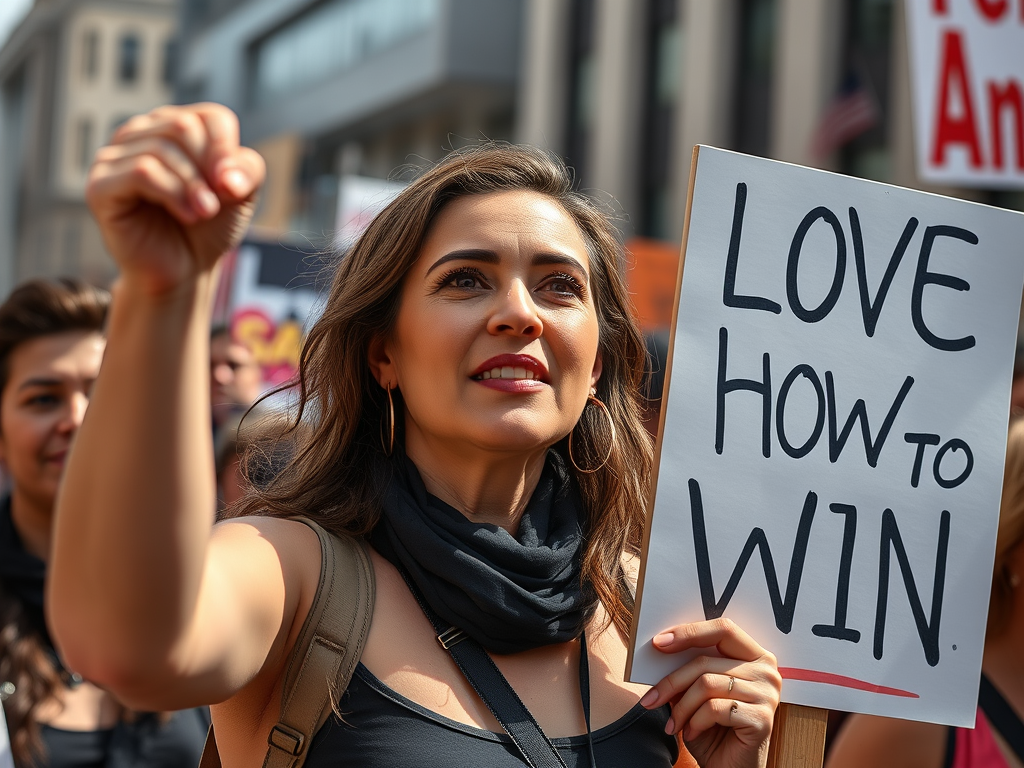
I used to tell my Community Organizing students that we’re far more powerful when we fight for what we love than when we fight against what we hate. At the time, I wasn’t entirely sure it was true—but I thought it was and definitely wanted it to be. Lately, though, I’ve been asking myself whether I still believe that. Because the truth is: I’m angry. I’m afraid. I’m heartsick about what’s happening in my country. And when I look honestly at my own reactions, I can feel rage rising in me in ways I wish it wouldn’t.
In The Sacred Art of Lovingkindness, Rabbi Rami Shapiro asks a question that feels painfully relevant right now: Will you embrace this moment with kindness or with cruelty, with love or with fear, with generosity or with scarcity, with a joyous heart or an embittered one?
It’s a beautiful question. But my first response is How am I supposed to embrace this moment with kindness, love, or joy when I’m so damned angry, afraid and embittered?
Then I came across another passage this morning where Shapiro warns that unless we engage in a revolution of consciousness— cultivating the self-awareness to own our violence rather than excuse it—we are doomed.
This warning stopped me cold. Because there is violence in me right now. Not physical violence, but the inner kind— rage, hatred, a burning desire to strike back.
So I’m naming it. I’m claiming it. Not to justify it, but because I have always believed that honesty is a doorway to transformation. If I deny the violence that lives inside of me, I risk losing the clarity I need to act responsibly in this moment.
And this moment is dangerous. The threats to democracy we’re facing are real. They’re fueled by fear, greed, lies, resentment, and the deliberate dehumanization of entire groups of people. If we meet that energy with the same energy, we simply add to the fire.
But if we meet it with love—not the soft, gentle kind, but with fierce, disciplined love that refuses to surrender its humanity—we become something far more powerful than the forces trying to divide us.
Love is not naïve.
Love is not passive.
Love is not weak.
Love is strategy.
Love is clarity.
Love is resistance.
Love is how we stay human in a moment that is trying to make us forget our humanity.
So yes, I’m angry. I’m afraid. I’m grieving the country we truly seem to be losing while I’m wanting to fight for the one we still might return to or better yet, might someday become. And I know this much: if I want to defend democracy, I can’t do it from the small, constricted place inside me where hatred lives.
I have to move forward from the larger, braver place where love still insists on being possible.
And that is the choice I’m wanting to make —not because it’s easy, not because I’m in denial of my own potential for violence, but because I still need to believe that love is the only force strong enough to build the democracy we deserve, the one that Renee Good and Alex Pretti died defending.
So I’m asking you—whoever you are reading this—if it makes sense to you that we choose love as our way forward. Not a soft love, not a passive love, but a courageous, steady, justice-seeking love that refuses to surrender its humanity.
And I’m asking you to Speak up. Show up. Protect each other. Vote. Organize. Tell the truth. Refuse to dehumanize.
Let’s be the people who meet this moment with the kind of love that strengthens democracy rather than erodes it. The kind of love that builds the future we want our children and grandchildren to inherit.
The work is ours. The moment is now. And I’m determined to believe that love is how we win.
Posted in Democracy | Tagged choose love, crisis, defend democracy, Democracy, love in action, Renee Good and Alex Pretti, revolution of consciousness | 1 Comment »
Joanna Macy is currently in hospice, and not expected to be with us for much longer. The world will be losing a profound voice for ecological and social justice with her passing. Renowned for her groundbreaking work in systems theory and deep ecology, Macy has inspired countless individuals to transform despair into action through her teachings and workshops. Her ability to weave together insights from Buddhist philosophy and modern science provided a framework for understanding our interconnectedness with the earth upon which we all depend. As a prolific writer and speaker, she’s addressed critical issues such as nuclear threats, environmental degradation, and the deep grief associated with planetary loss. The absence of her wisdom will leave a significant void in the ongoing struggle for a sustainable future, while her legacy will continue to resonate with those of us seeking hope in the face of overwhelming challenges. May her extraordinary life continue to be a beacon to us, we ordinary people, to hold onto hope, so vital not only for warding off despair, but for fostering resilience and igniting change. May we, for the sake of all who share this beautiful planet (and for those not yet born) commit ourselves to taking meaningful action, remembering that our choices today shape the world of tomorrow.
So much of what Joanna Macy has said and written has touched and taught me, far too much to even begin to distill within the context of a blog post, so I’ll simply leave you with this, “If the world is to be healed through human efforts, I am convinced it will be by ordinary people, people whose love for this life is even greater than their fear.”
Posted in mental health | Tagged activism, environmentalism, Hope, Joanna Macy | Leave a Comment »

“In order to move beyond self-blame and isolation, it is important that we recognize the multifaceted ways that the economy assaults our self-esteem, our joy and our happiness. The good news is that throughout the world, people are waking up to the systemic roots of their psychological wounding, and coming together to find refuge and healing… People are stepping away from the consumer rat-race, and restoring the connections to self, community and nature that are the cornerstones of real wellbeing.” Helena Norberg-Hodge in Countercurrents.
We’re regularly bombarded with bad news, and frequently presented with problems that all too often appear to be without solutions. I can only imagine the toll this takes on our hearts and souls. I’m reminded of a line in an old song, “sure could use a little good news today.” And so the following documentary offers just that, a little good news, and people implementing solutions. People like Helena Norberg-Hodge.
Posted in collective action, community, creativity, good life, healing, hope, sustainability | Tagged Good News, healing, Helena Norberg-Hodge, living well, The good life | Leave a Comment »

“How do we change the world? One random act of kindness at a time.”
Morgan Freeman
I was in Scotland when I learned about the terrible attacks in Lewiston, Maine – the city where we have a home and where my daughter, grandchildren, and so very many people that I care about live. It’s where my husband works and where I had a private psychotherapy practice for several years. My heart feels leaden this first morning back in Maine as I struggle to make sense of the senseless.
During our stay in Ireland and Scotland, the kindness of strangers repeatedly touched us. A level of caring that seems increasingly rare in the United States and which has prompted me to ask: what has happened in a country so often touted as “the richest and most powerful in the world” that has left us feeling less connected, less compassionate, and less kind to those beyond our immediate circles? To what extent do our fractured connections, diminishing sense of community, and the scarcity of random acts of kindness correlate with the surge in random acts of violence? And how might offering and receiving more frequent acts of kindness contribute to our healing?
While I know all too well that there are no simple solutions or quick fixes, it seems reasonable to expect that living in a kinder and more connected world would be living in a safer world. In a kinder world, we’d be far more likely to experience greater empathy, resolve conflicts more effectively, feel less lonely, ask for help more readily, and possess greater happiness and well-being.
While we can only speculate about the motivations of the individual responsible for the tragedy in Lewiston (whom I choose not to name), it’s been said that “hurt people hurt.” Amid our collective pain here in Maine, I’m hoping that the assertion that “kindness begets kindness” might offer us additional perspective and guidance as we move through the coming dark and dismal days.
When we experience and witness kindness, we’re far more likely to pass it on. When we’ve been supported in our grief, we’re more likely to reach out to another who is grieving. When we receive help from a stranger, we’re more likely to help someone unknown, and when we’ve been a recipient of generosity, we often behave more generously. In this all too often “what’s in it for me?” culture, research informs us that the kinder we are, the healthier, happier, and more resilient we tend to be. And so, in passing on acts of kindness and compassion, we not only help to heal this broken world, we, too, experience healing.
I have so many questions and far too few answers, so I’ve begun searching for any perspective, wisdom, and comfort I might find. I’ll carve out time during the next few months to share here some of what I discover. In the meantime, I’m going to lean on kindness as much as I possibly can.
With so much love and so much sadness…
Tammie Fowles
Following are two videos that I came across this morning that offer some perspective on our culture at large, and offers a vision for healing.
Posted in american pathology | Tagged gun violence, healing, kindness, Lewiston, mass killing | Leave a Comment »
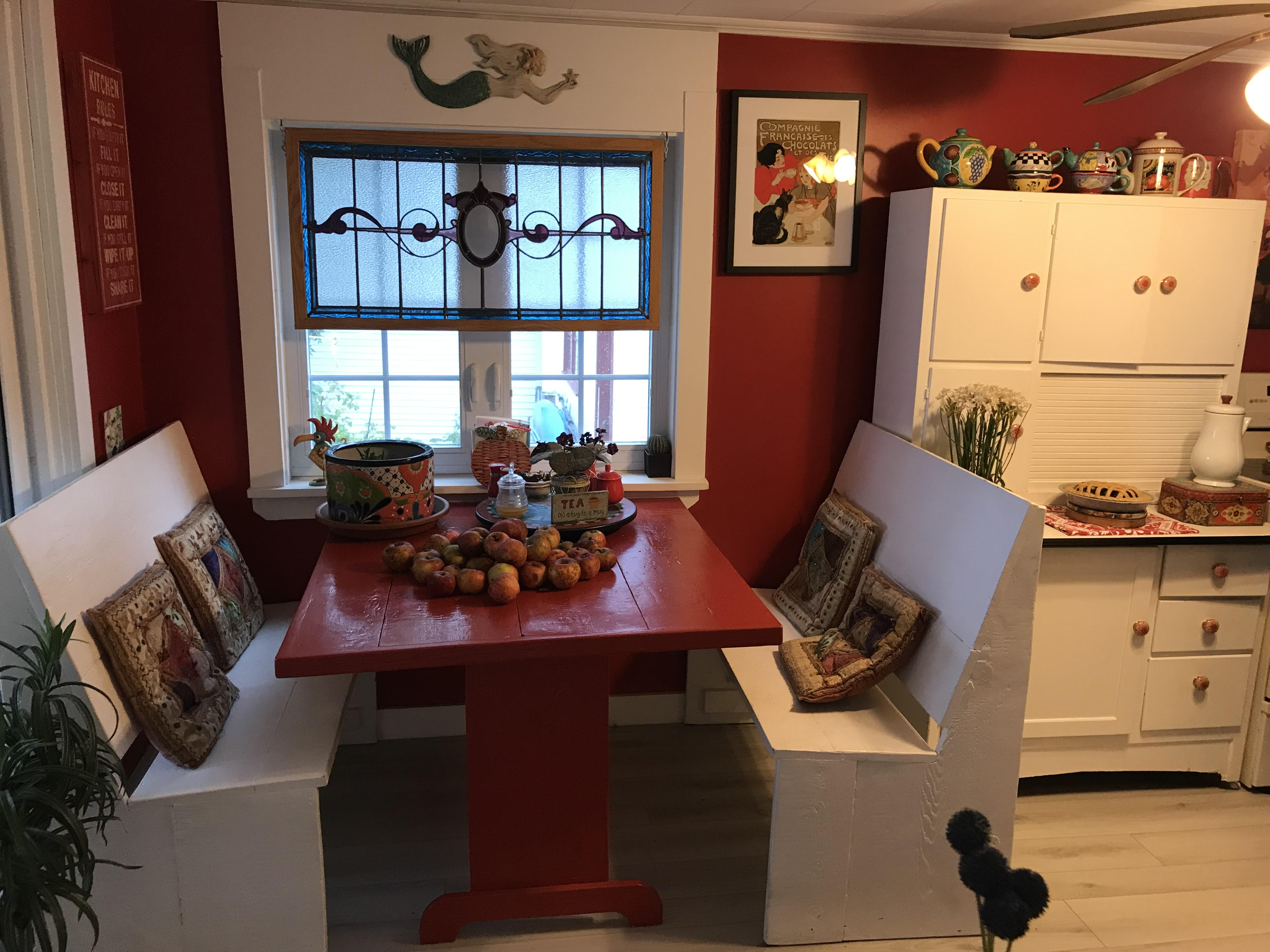
A little over twenty years ago, we purchased an old house on the lake in a small village in Maine. Approximately sixteen years later, a tree that we had completely neglected and barely noticed began producing apples. Today, apples that I’ll make applesauce with this afternoon completely cover my kitchen table. The apples are ‘ugly.’ Bruised and covered in blemishes, they could never be sold in a store, and yet they are delicious. They are a precious reminder to me of grace – gifts neither asked for nor cultivated. Each afternoon for the past few weeks, I’ve collected the fruit of this tree with an incredible sense of gratitude, and I gently place a hand on the trunk of this, my very own ‘giving’ tree, one which had lived beside me for so many years unnoticed and uncelebrated, and I thank it. It occurred to me after reading the Hindu parable about “Atithi Devo Bhava,” that we are far less the owners of the land upon which she is rooted as we are the tree’s guests, and she has gifted us generously. I now recognize the divine that dwells within her, and I bow in her presence.
Posted in awe and wonder | Tagged apple tree, divine within, grace, living well, nature, sacred, trees | 6 Comments »

Dear reader,
Maya Angelou wrote, “There is no greater agony than bearing an untold story inside you. So, first, I want to offer you words of support and encouragement as you come to terms with your own untold story. I know all too well the pain and complexities of dealing with issues related to spiritual trauma and how challenging the recovery process can be. Please know that you’re not alone.
Exploring and confronting your wounds can be painful and formidable work, and I deeply respect your inner strength and determination in beginning this process. I avoided dealing with my own spiritual wounds for far too long.
Despite what some experts might have you believe, there is no magic formula or precise recipe to follow on your healing journey; it’s a deeply personal process. It’s likely that you’ll occasionally feel overwhelmed and uncertain as you do the work required for healing. It’s helpful to remind yourself that your feelings are normal and understandable during these times.
Someone once observed that recovery is never linear, meaning it doesn’t occur in a straight line from pain to healing. Instead, it’s a long, winding spiral of growth, self-discovery, and reclamation. You begin to retrieve those parts of yourself that got left behind, like your capacity for joy, optimism, self-confidence, and self-love. Have you ever noticed how small children can be full of themselves in the most delightful way? There was a time very early in your life when that small and exuberant child was you.
And while it’s true that your past religious experiences may continue to fester and plague you, they most definitely don’t define you. You have within you the ability to shape your future, honor your truth, and embrace your authentic self, although you might not believe this yet. For now, please be gentle with yourself. You deserve compassion and kindness. I urge you to treat yourself as you would a close friend who is going through a difficult time. And so, how about considering doing the following?
Reach out to friends, family, and or support groups for reassurance and perspective.
Sharing your experience with others who understand can be incredibly therapeutic. A healthy community can validate your feelings and experiences and provide valuable emotional support. Group members have often faced some of the same challenges you now face. Connecting with people further along in their healing process can inspire and encourage you. In turn, offering others your insights and support is both gratifying and empowering.
Consider working with a therapist specializing in spiritual trauma and recovery.
Experienced and empathic therapists can assist you in navigating the complex psychological and emotional challenges that often accompany spiritual trauma and abuse. A competent, caring therapist also provides a much-needed place to feel safe, validated, and understood as you begin the vital work of healing.
Make your health and well-being a priority.
Most survivors of trauma aren’t particularly good at this at first. Work on giving your body what it needs to thrive, feed your soul, and take time for yourself. Do things that bring you pleasure and peace.
Begin establishing clear boundaries with people or situations that trigger painful memories or emotions.
Practice saying, “No.” I’m guessing that this will be incredibly uncomfortable at first. It’s unlikely that you were encouraged to communicate your needs and set limits while growing up. And yet, both are essential to protecting your time, emotional well-being, and energy.
Learn as much as you can about spiritual trauma and recovery.
“Knowledge is power” isn’t just a tired old cliche. It’s plain and simple truth. Trauma is often isolating, and learning about the common symptoms, beliefs, and behaviors associated with spiritual trauma can help you feel less alone. It can also assist you in better understanding your experiences, locate resources for healing, reclaim your spirituality, and reduce your risk of further trauma.
Celebrate your progress, no matter how modest.
Healing is a long and often arduous process. Acknowledging your progress can help you stay motivated and hopeful. Recognizing how you’ve grown increases your self-esteem and fosters your sense of strength and resiliency.
Give Yourself Permission to Heal
Giving yourself permission to heal may seem like a strange suggestion. After all, why would you need permission? Because I suspect that you probably received indirect messages such as you’re a sinner, not good enough, or not worthy of love and acceptance. These messages tend to live submerged within your unconscious, making it difficult to believe at the deepest level that you deserve to heal. You may also carry a significant amount of guilt for disappointing your family or leaving your spiritual community, regardless of the harm it may have caused you. Perhaps the threat of hell or Armageddon keeps you frozen in fear. And (or) you may be afraid of the unknown and what it will mean to let go of what has occupied such an immense space in your life for so long? How will you fill the gaping void? Can you now appreciate why you might resist healing even though you desperately want to? We’re strange and complicated creatures, you and I. Capable of sabotaging ourselves and acting against our best interests. We’re also extraordinary in a vast number of ways.
You’ve endured so much fear, pain, and confusion throughout your lifetime, and yet you’ve survived it all. You, my dear reader, are a walking, talking miracle who most definitely deserves to be healthy, happy, and whole. You’re capable and worthy of creating and embracing a rich, fulfilling, and meaningful life. It’s simply waiting for you to move toward it…
With heartfelt love and longing,
Tammie Fowles
Web Resources on Healing and Recovering from Spiritual Trauma and Religious Abuse
Resources for Religious Trauma and Adverse Religious Experiences
Posted in healing, Spiritual Trauma and Religious Abuse, spirituallity, trauma | Tagged religious abuse, spiritual trauma, spirituality and healing, toxic religion. | Leave a Comment »
I watched an excellent video today by one of my favorite wisdom seekers – Gabor Mate. Daniel Mate, his oldest son, accompanied Gabor. The two focused on the relationship between adult children and their parents, providing insights for both. If you’ve never listened to Gabor Mate before or read one of his books (or even if you have), he and his son are well worth a listen. Daniel and Gabor have written a soon-to-be-published book together, “Hello Again: A Fresh Start for Parents and Their Adult Children” and will be producing a podcast as well.
Posted in mental health | Tagged parent and adult children, parenting adult children | Leave a Comment »
I watched an excellent TED talk this morning by Caroline Myss that I encourage you to check out. Here’s one of the gems that she offers, “Every single choice we make is either going to enhance the spirit or drain it. Every day, we’re either giving ourselves power or taking it away.” And here’s another, “Never blame another person for your personal choices – you are still the one who must live out the consequences of your choices.”
Posted in mental health | Tagged Choices, healing | Leave a Comment »
-
Recent Posts
Categories
Archives
Pages
-
Join 143 other subscribers
Tammie’s Tweets
Tweets by mainetherapistShare This Blog

SagePlace: Creating the Life You Love
Top Rated
 Spirituality, Therapy, and the Good Life